


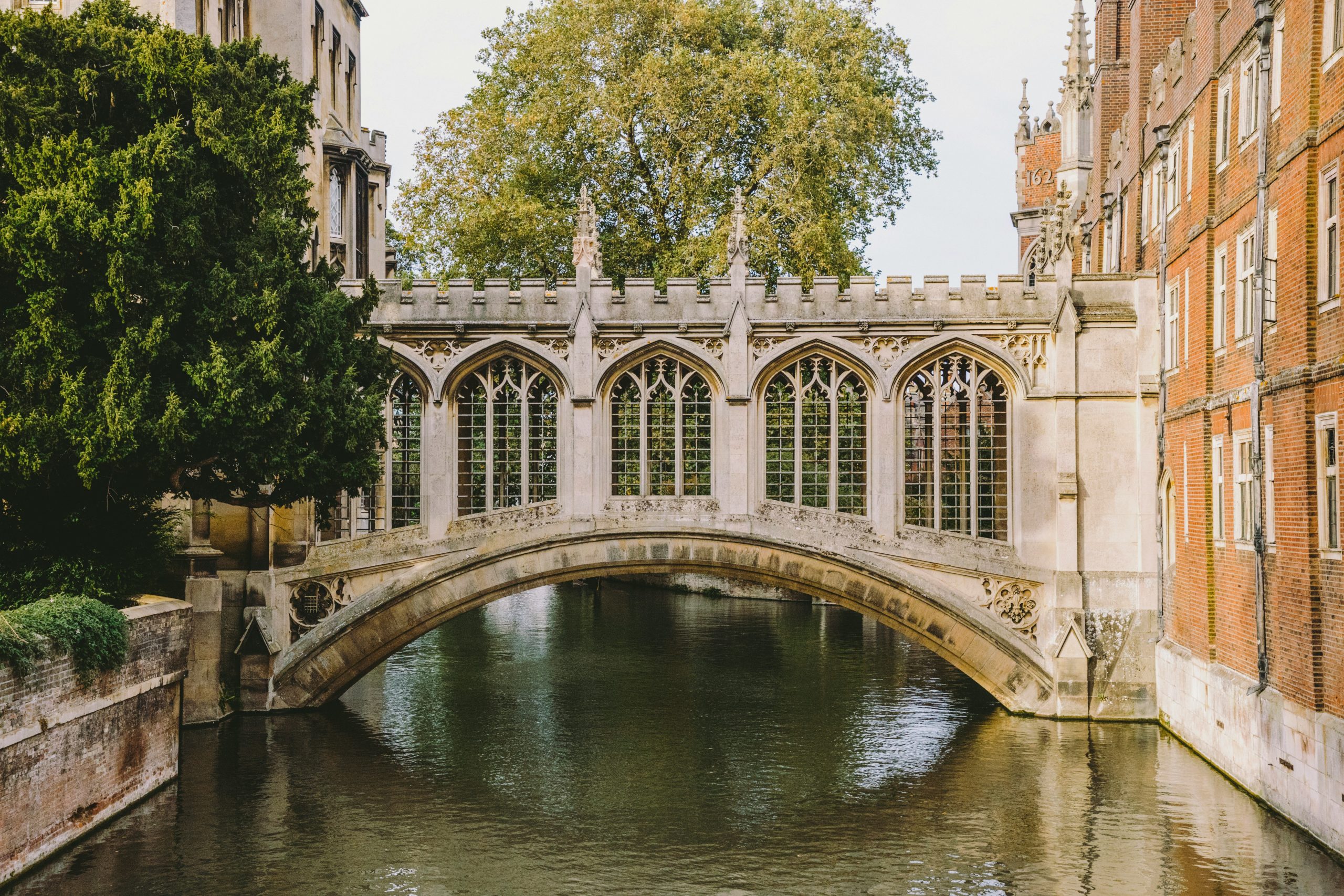
From 3–7 August 2026, Maths4DL and Prob_AI jointly organised the Mathematical Foundations of Deep Learning Summer School at the Centre for Mathematical Sciences at the University of Cambridge.
The school brought together around 50 participants from 35 institutions across ten countries. Most were early-career researchers at doctoral or postdoctoral level, representing a wide range of academic backgrounds and research interests. This diversity contributed to lively discussions throughout the week and encouraged participants to make connections across mathematics, scientific computing and machine learning.
The scientific programme comprised four intensive day-long courses delivered by Eldad Haber (University of British Columbia), Nikola Kovachki (New York University), Audrey Repetti (Heriot-Watt University) and Brynjulf Owren (NTNU).
Their courses covered flow-based generative modelling, approximation theory for neural networks and neural operators, variational and learning-based approaches to inverse problems, and structure-preserving neural networks. The breadth of the programme did not come at the expense of mathematical depth. Participants were able both to strengthen their understanding of familiar subjects and to engage with ideas from neighbouring research areas.
Participant contributions were also central to the week. Monday evening’s reception included a poster session featuring ten research posters, which prompted extensive discussion between participants and lecturers. On Wednesday morning, twelve participants gave short presentations on their current research, covering topics ranging from inverse problems and operator learning to optimisation, generative modelling and scientific machine learning.
These sessions allowed early-career researchers to share their work, exchange ideas and receive feedback from both lecturers and fellow participants. They also helped make the summer school a genuinely collaborative event rather than a week of lectures alone.
We would like to thank Prob_AI for its collaboration and support, the four lecturers for delivering such an ambitious and engaging programme, and everyone who contributed a talk or poster. Above all, we thank all the participants whose questions, discussions and enthusiasm made the week such a rewarding event.
The complete scientific programme and participant contributions are available on the summer school website.


